“`markdown

TITLE: Green Building Certification Ratings: 7 Essential Systems Compared

SLUG: green-building-certification-ratings

FOCUS_KEYWORD: green building certification ratings

META_TITLE: Green Building Certification Ratings: 7 Essential Systems Compared

META_DESCRIPTION: Compare the top green building certification ratings, including LEED, BREEAM, WELL, and more. Learn how to choose the best certification for your Istanbul property with insights from AA-DO Architecture & Interior Design.

Sustainable architecture is more than a trend—it’s now a necessity for property owners, investors, and developers. As the world faces pressing environmental challenges, the demand for eco-conscious spaces is rising rapidly, especially in urban centers like Istanbul. Understanding green building certification ratings has become vital for anyone in the property sector. These systems rigorously evaluate and reward buildings for their environmental performance, resource efficiency, and positive impact on occupant well-being.

Whether you own a villa, manage commercial property, or develop real estate portfolios, choosing the right certification can significantly impact your project’s value, long-term sustainability, and compliance with evolving regulations. A certified green building is no longer just a badge of honor—it is a strategic investment that positions your property for success in a future shaped by climate-smart choices and market expectations.

Table of contents

  • What Are Green Building Certification Ratings?
  • The Top Green Building Certification Ratings Systems
  • How to Choose the Best Certification for Your Project
  • Comparing Certification Ratings: Real-World Insights
  • Frequently Asked Questions

What Are Green Building Certification Ratings?

Green building certification ratings are standardized, third-party systems designed to assess, measure, and recognize buildings for their environmental performance and sustainable design. These ratings evaluate various aspects of the built environment, including:

  • **Energy efficiency:** How well does the building minimize energy use, rely on renewables, and reduce carbon emissions?
  • **Water conservation:** Are there systems in place to reduce water consumption, recycle water, and manage stormwater responsibly?
  • **Indoor air quality:** Does the design promote healthy air by minimizing pollutants and ensuring proper ventilation?
  • **Materials use:** Are sustainable, recycled, or certified materials used in construction and fit-out?
  • **Site sustainability:** Does the building minimize ecological footprint, encourage biodiversity, and support sustainable mobility?

Achieving certification from a recognized rating system demonstrates a commitment to responsible design, efficient operation, and occupant well-being. This is not just a matter of environmental stewardship—it’s also about future-proofing investments, complying with regulations, and responding to the growing expectations of tenants, buyers, and communities.

Why Istanbul Property Owners Are Adopting Certification

In Istanbul, a city at the crossroads of tradition and innovation, green building certifications are gaining momentum. Local property owners are leveraging certifications to:

  • **Attract premium tenants:** Eco-conscious businesses and international corporations increasingly require certified spaces.
  • **Enhance property value:** Green-certified buildings can command higher sale and rental prices.
  • **Meet regulatory requirements:** Turkey is implementing stricter building codes and incentives for sustainable construction.
  • **Reduce operational costs:** Efficient buildings save on energy, water, and maintenance—improving the bottom line.

For architects and designers, integrating these standards from the earliest design phases leads to smoother project execution and better long-term outcomes. At AA-DO Architecture & Interior Design, we have helped clients navigate the sometimes complex certification process for both commercial towers and bespoke residential properties.

Example:

A new office complex in Istanbul’s Levent business district achieved BREEAM certification by incorporating energy-efficient HVAC systems, rainwater harvesting, and low-emission materials. As a result, the building attracted multinational tenants and secured favorable financing terms.

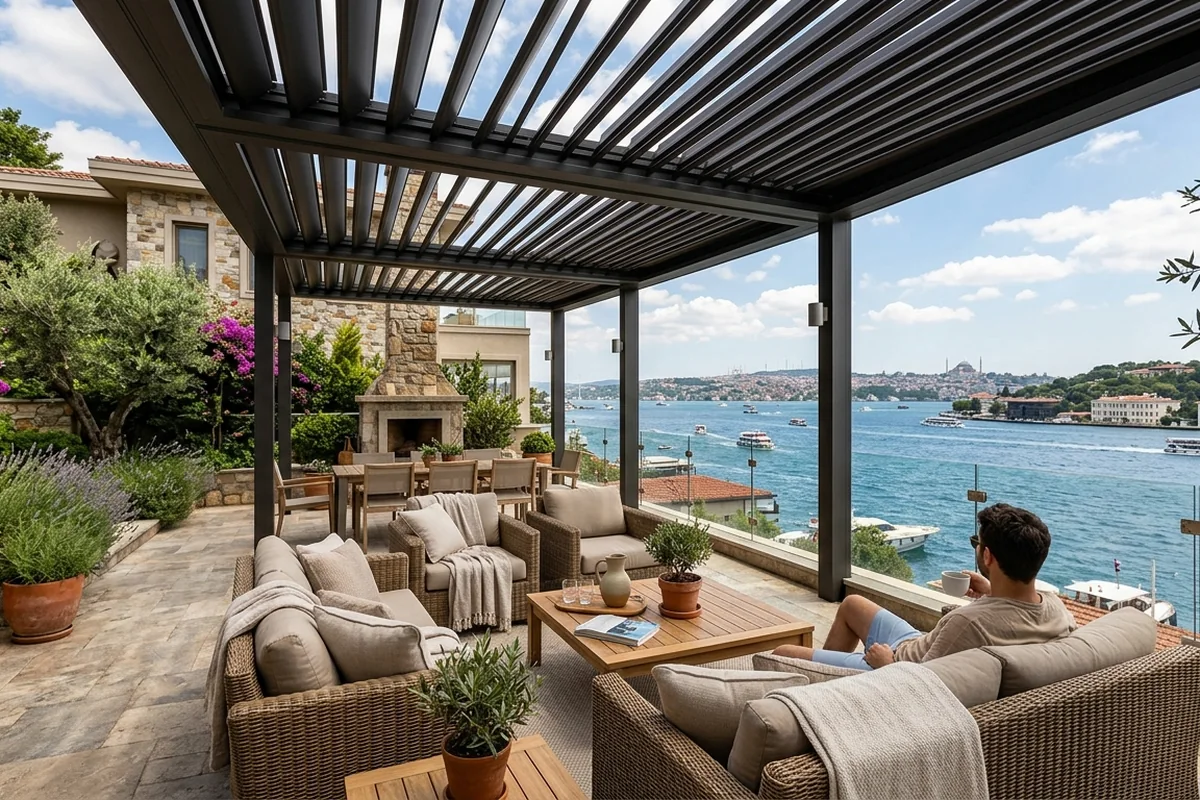
green building certification ratings cover image

The Top Green Building Certification Ratings Systems

Several globally recognized green building certification ratings exist, each with its own unique focus, structure, and applicability. Understanding the subtle differences, strengths, and requirements of each system is key to making an informed choice for your project. The seven most influential systems worldwide are:

1. **LEED (Leadership in Energy and Environmental Design)**

  • **Origin:** United States, developed by the U.S. Green Building Council (USGBC)
  • **Scope:** Global, applicable to new construction, existing buildings, interiors, homes, and neighborhoods.
  • **Assessment Areas:** Sustainable sites, water efficiency, energy and atmosphere, materials and resources, indoor environmental quality, innovation.
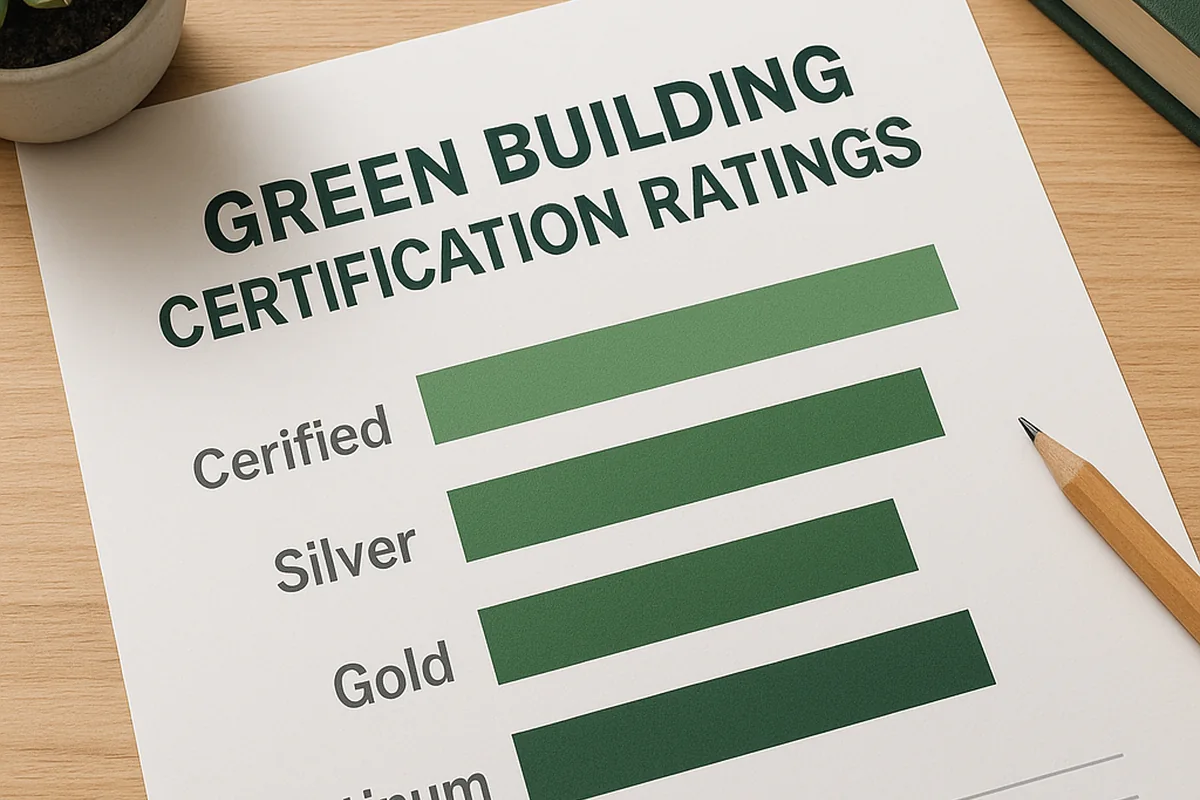
  • **Certification Levels:** Certified, Silver, Gold, Platinum.

Concrete Example:

The Zorlu Center in Istanbul is LEED Gold certified and incorporates energy-saving lights, a green roof, and advanced water management systems, resulting in 25% lower annual energy costs compared to typical buildings of its size.

2. **BREEAM (Building Research Establishment Environmental Assessment Method)**

  • **Origin:** United Kingdom, by BRE Global
  • **Scope:** Europe, Middle East, and expanding globally; covers new and existing buildings, refurbishments, and communities.
  • **Assessment Areas:** Management, health and well-being, energy, transport, water, materials, waste, land use and ecology, pollution, innovation.
  • **Certification Levels:** Pass, Good, Very Good, Excellent, Outstanding.

Mini-Case-Study:

The Rönesans Tower in Istanbul achieved BREEAM Excellent by integrating a smart building management system and sustainable landscaping, improving occupant comfort and reducing water use by 35%.

3. **WELL Building Standard**

  • **Origin:** United States, administered by the International WELL Building Institute (IWBI)
  • **Scope:** Global, with focus on new and existing buildings, interiors, and core & shell.
  • **Assessment Areas:** Air, water, nourishment, light, movement, thermal comfort, sound, materials, mind, community, innovation.
  • **Focus:** Prioritizes human health and well-being.

Example:

A tech company in Istanbul retrofitted their office to meet WELL standards, adding circadian lighting, filtered air systems, and healthy food options in the cafeteria. Employee surveys reported a 20% improvement in perceived well-being and productivity.

4. **DGNB (German Sustainable Building Council)**

  • **Origin:** Germany
  • **Scope:** Europe and international projects; known for holistic, life-cycle-based evaluation.
  • **Assessment Areas:** Environmental, economic, sociocultural and functional, technical, process, and site quality.
  • **Certification Levels:** Bronze, Silver, Gold, Platinum.

Mini-Case-Study:

A mixed-use development in Germany achieved DGNB Gold by using cradle-to-cradle certified materials and designing for adaptability and future reuse.

5. **Green Star**

  • **Origin:** Australia, administered by the Green Building Council of Australia (GBCA)
  • **Scope:** Australia and international, with ratings for design, construction, interiors, and communities.
  • **Assessment Areas:** Management, indoor environment quality, energy, transport, water, materials, land use and ecology, emissions, innovation.
  • **Certification Levels:** 4 Star, 5 Star, 6 Star.

Data Point:

Buildings rated Green Star in Australia have 66% less greenhouse gas emissions and use 51% less potable water than typical buildings.

6. **CASBEE (Comprehensive Assessment System for Built Environment Efficiency)**

  • **Origin:** Japan, supported by the Japan Sustainable Building Consortium
  • **Scope:** Japan and select international projects; evaluates both building efficiency and environmental impact.
  • **Assessment Areas:** Energy, resources and materials, local environment, indoor environment.
  • **Certification Levels:** C, B-, B+, A, S.

Example:

A Japanese hotel chain adopted CASBEE, retrofitting properties with solar panels and low-flow plumbing, leading to 40% energy savings across its portfolio.

7. **EDGE (Excellence in Design for Greater Efficiencies)**

  • **Origin:** Developed by the International Finance Corporation (IFC), part of the World Bank Group.
  • **Scope:** Emerging markets, with a focus on resource efficiency in homes, offices, hotels, retail, and hospitals.
  • **Assessment Areas:** Energy, water, materials.
  • **Threshold:** Minimum 20% savings in energy, water, and embodied energy in materials.

Mini-Case-Study:

A residential development in Vietnam used EDGE to certify affordable housing, achieving 28% energy savings and reducing monthly utility bills for residents.

Each certification system varies in prerequisites, cost, regional recognition, and adaptation options. For Istanbul projects, LEED and BREEAM are most prevalent, but WELL and DGNB are gaining traction as focus shifts to health and holistic sustainability.

Explore examples on our AA-DO Architecture & Interior Design project page for inspiration.

For more details:

  • [U.S. Green Building Council (LEED)](https://www.usgbc.org/leed)
  • [BRE Global (BREEAM)](https://www.breeam.com/)

How to Choose the Best Certification for Your Project

Selecting the optimal green building certification is a strategic decision that depends on your unique goals, location, type of building, and available resources. Start with these steps:

1. **Define Your Project Objectives**

  • Is your main focus reducing operational costs, enhancing occupant health, increasing asset value, or meeting specific regulations?
  • For example, a school may prioritize WELL for student well-being, while a luxury villa developer might target LEED for market appeal.

2. **Assess Your Building Type**

  • Residential, commercial, mixed-use, industrial, or community-focused projects may be better suited to certain certifications.
  • Example: BREEAM and LEED are both strong for commercial offices, but EDGE could be ideal for large-scale affordable housing.

3. **Evaluate Regional Relevance and Recognition**

  • LEED and BREEAM offer strong international branding and are often required by multinational corporations.
  • Some countries offer incentives for national systems (e.g., CASBEE in Japan, Green Star in Australia).

4. **Budget Accordingly**

  • Registration, documentation, and third-party audit fees vary significantly.
  • Example: LEED certification for a mid-size office building might cost $30,000–$80,000, while EDGE can be more affordable for emerging markets.

5. **Consult Experienced Professionals**

  • Engage architects, engineers, and sustainability consultants with hands-on certification experience.
  • At [AA-DO Architecture & Interior Design](https://aa-do.com/services/), we guide clients through documentation, design, and compliance for smooth certification.

Key Benefits of Pursuing Certification

  • **Increased property value and marketability:** Certified buildings typically sell and lease faster, often at a premium.
  • **Reduced operational costs:** Efficient systems and resource management lower utility and maintenance expenses.
  • **Healthier, more productive environments:** Improved air quality and natural light lead to better occupant satisfaction and performance.
  • **Access to incentives:** Many governments offer tax breaks, grants, or favorable financing for certified projects.
  • **Enhanced brand and corporate image:** Demonstrates leadership in sustainability and social responsibility.

Mini-Case-Study:

A boutique hotel in Istanbul pursued LEED Silver to appeal to eco-conscious tourists. After certification, they saw a 15% increase in occupancy and earned feature coverage in international travel media.

For actionable steps on integrating green standards:

See our guide on project planning and execution.

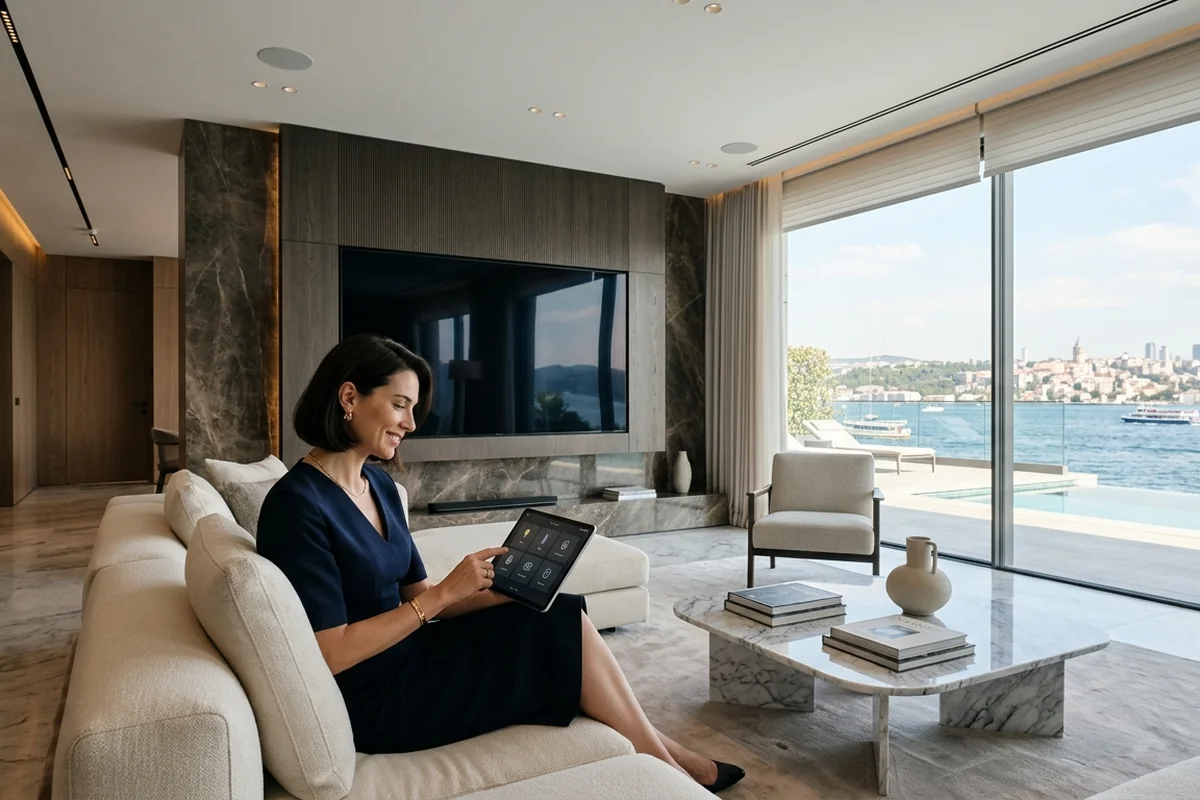
green building certification ratings supporting image

Comparing Certification Ratings: Real-World Insights

Implementation: Opportunities and Challenges

Implementing green building certification systems can unlock substantial benefits, but each system comes with its own set of practical considerations:

  • **LEED:**
  • **Strengths:** International recognition, comprehensive framework, flexible credit system.
  • **Challenges:** Extensive documentation requirements, higher upfront costs.
  • **Example:** An Istanbul tech hub achieved LEED Platinum by investing in rooftop solar, rainwater harvesting, and a green wall. They reported a 20% reduction in energy bills and attracted a global co-working operator as anchor tenant.
  • **BREEAM:**
  • **Strengths:** Thorough environmental analysis, flexible for different building types.
  • **Challenges:** Some criteria may require adaptation for non-UK regulations or local context.
  • **Example:** A shopping mall in Istanbul retrofitted its waste and water systems for BREEAM certification, leading to cost savings and a “Very Good” rating.
  • **WELL:**
  • **Strengths:** Focuses on occupant health, which is increasingly valued post-pandemic.
  • **Challenges:** May require significant upgrades in air, water, and wellness amenities.
  • **Example:** A finance company adopted WELL standards, resulting in reduced sick days and higher employee retention.

Data: Measurable Benefits

According to the World Green Building Council:

  • Green-certified buildings achieve up to **23% higher occupancy rates**.
  • They command **8–12% rental premiums**.
  • Operational costs may be **25–30% lower** due to energy and water savings.

A local example:

A commercial office building in Istanbul achieved LEED Gold, resulting in:

  • 18% reduction in annual energy costs (approx. $50,000/year savings)
  • 30% less water usage, thanks to low-flow fixtures and greywater reuse
  • Healthier workspaces that boosted staff retention by 10%

Global Trends

  • **Adoption is accelerating:** Over 100,000 buildings worldwide are LEED certified as of 2023.
  • **Retrofits are common:** Existing building certifications are on the rise, with owners upgrading systems to remain competitive.
  • **Tenant demand:** More global companies require green certification as part of their leasing policies.

For more examples:

Browse the GBCI project database.

green building certification ratings detail image

Frequently Asked Questions

Q1: What is the most popular green building certification rating?

A: LEED is currently the most widely adopted green building certification rating worldwide due to its flexibility, international recognition, and comprehensive framework. Over 180 countries have LEED projects, making it a global benchmark for sustainable buildings.

Q2: How does green building certification impact property value?

A: Certified buildings typically command higher resale and rental values, attract eco-conscious tenants, and enjoy lower operating costs—making them more appealing to investors and owners. Studies show rental premiums of 8–12% and faster leasing cycles for certified buildings.

Q3: Can existing buildings achieve green certification?

A: Yes, many certification systems, including LEED (O+M) and BREEAM In-Use, offer pathways for retrofitting and certifying existing buildings, often with significant improvements in efficiency and comfort. Istanbul’s historic districts, for example, have successfully applied these standards during sensitive renovations.

Q4: Are green certifications only for new construction?

A: No. While new buildings can target the highest levels, most systems have dedicated tracks for existing buildings, renovations, and even interior fit-outs.

Q5: Is certification worth the cost?

A: For most projects, the long-term savings on energy, water, and maintenance—plus increased value and marketability—far outweigh the initial certification and documentation costs.

In Summary:

Green building certification ratings are essential tools for any property owner, investor, or developer aiming for sustainability, profitability, and future readiness. Choosing the right system—LEED, BREEAM, WELL, DGNB, Green Star, CASBEE, or EDGE—can unlock tangible benefits for your project in Istanbul or beyond. For expert guidance and real-world experience, reach out to AA-DO Architecture & Interior Design.

“`

Related Posts

Privacy Preference Center