

Furniture selection in Istanbul can combine contemporary forms, regional craftsmanship and references to the city’s architectural heritage. This guide considers materials, room layouts and styles for villas and apartments. Use these ideas as options to evaluate against daily life, budget and the property rather than as a ranking of current market trends.
Compare the classical furniture details of Merter Platform Sample Flat with the more restrained composition of AD Flat. Their room views show how seating, tables, storage and circulation work together; judge suitability by dimensions and daily use rather than a trend label.
Table of contents
- Furniture for Istanbul Homes: Craft, Nature and Character
- Material Palettes and Finishes Dominating Istanbul’s Luxury Interiors
- Room-by-Room Breakdown: Applying the Trends Practically
- Comparing the Top Furniture Styles for Istanbul Luxury Homes
- Frequently Asked Questions
Furniture for Istanbul Homes: Craft, Nature and Character
Craftsmanship, nature-inspired forms and cultural references offer three useful directions. Bespoke work can address particular dimensions or preferences; well-chosen catalogue furniture can also be appropriate. Compare provenance, workmanship, comfort and serviceability.
Nature-inspired interiors may combine curved seating, natural linen, travertine, timber and planting. Rattan accents can sit alongside marble or brass. Assess proportions, care needs and durability rather than assuming these materials are required for a high-end home.
İznik-inspired geometry, Hereke rugs or custom joinery can introduce cultural references alongside contemporary furniture. Choose pieces for a meaningful relationship to the home, not simply as decorative labels. Explore the AA Architecture portfolio when discussing design direction, and clarify which examples are completed works or proposals.
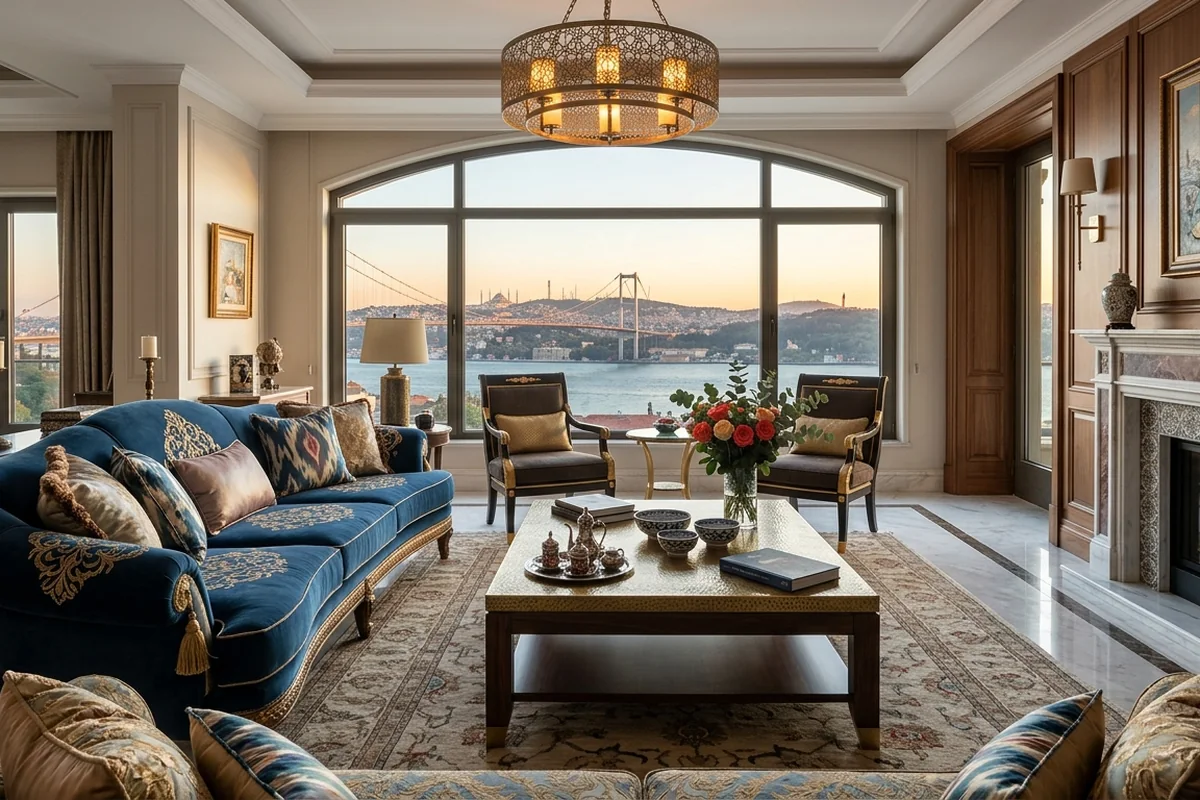
Material Palettes and Finishes for Istanbul Interiors
Warm, tactile options include brushed brass, smoked oak veneer, honed marble and cream or camel upholstery. Their suitability depends on scale, lighting, cleaning and maintenance. Review samples together rather than choosing each surface in isolation.
The following material options can be compared for an Istanbul home:
- Travertine and stone-effect surfaces — used on dining tables, side tables, and even bed bases for an earthy, sculptural quality
- Bouclé and textured weaves: Options for tactile upholstery; compare cleaning, abrasion resistance and suitability for children or pets.
- Smoked and cerused oak — specified for cabinetry, wardrobes, and bookshelves; pairs beautifully with brass or matte black hardware
- Reeded glass: Can add texture to cabinets or partitions while admitting light. Check privacy, safety and cleaning needs.
- Reclaimed or FSC-certified timber: Review product documentation, sourcing, condition and suitability. Distinguish recycled content from certification claims.
Ask for sourcing and emissions evidence when comparing furniture and finishes. FSC documentation addresses defined timber sourcing criteria; low-VOC wording does not establish all aspects of indoor air quality. Product performance, ventilation, maintenance and useful life remain relevant. Published furniture examples can provide design references, but are not evidence of buyer preferences.
Warm neutrals can be paired with terracotta, sage, navy or aged-bronze accents in cushions, artwork and accessories. Smaller, replaceable elements allow a change of atmosphere without replacing the main furniture. Test the palette under actual daylight and artificial light.
Room-by-Room Breakdown: Applying the Trends Practically
Understanding macro trends is one thing; knowing how to apply them room by room is where real design value is created. Let’s walk through the key spaces in a luxury Istanbul home and map the trends to specific furniture decisions.
Living Room
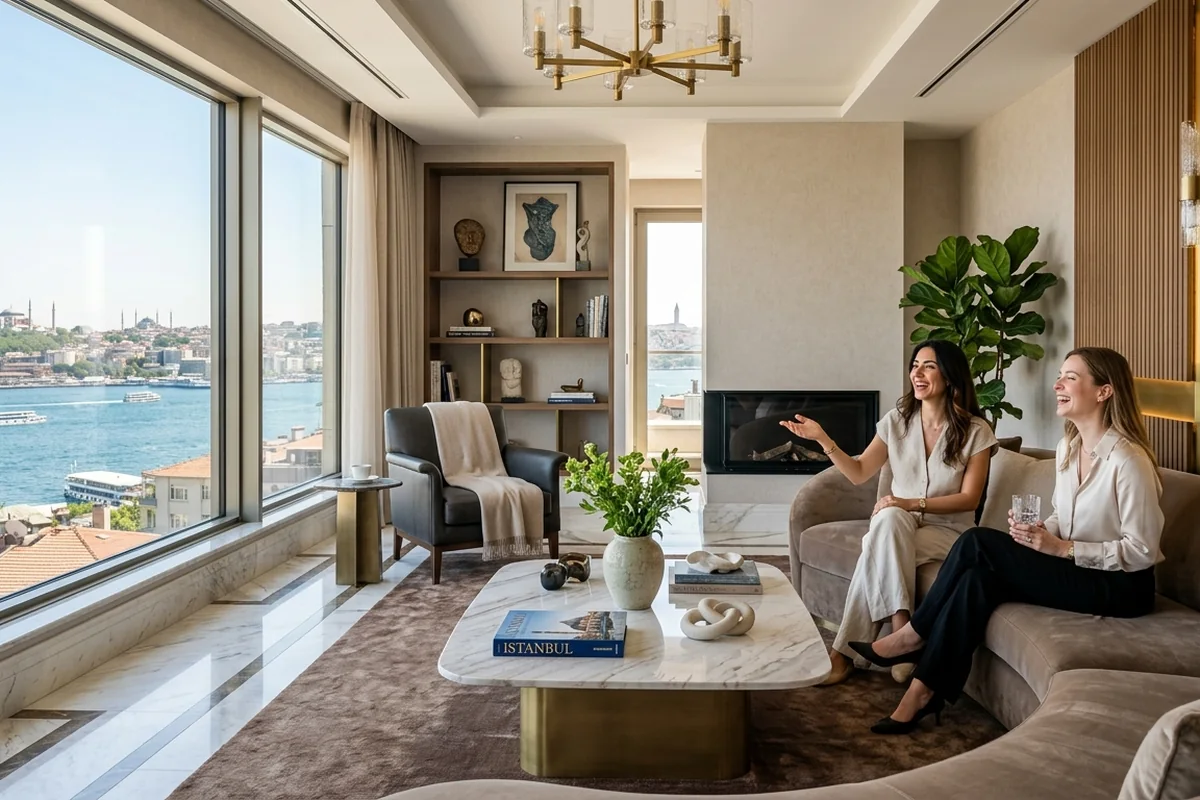
A living room can use a modular or curved sofa with a stone-top coffee table and a contrasting armchair. Bouclé, linen or leather introduce different textures; a hand-knotted rug or Turkish flat-weave can define the seating area. Select the combination according to circulation, seating needs, cleaning and acoustic comfort, not a prescribed trend.
Dining Room
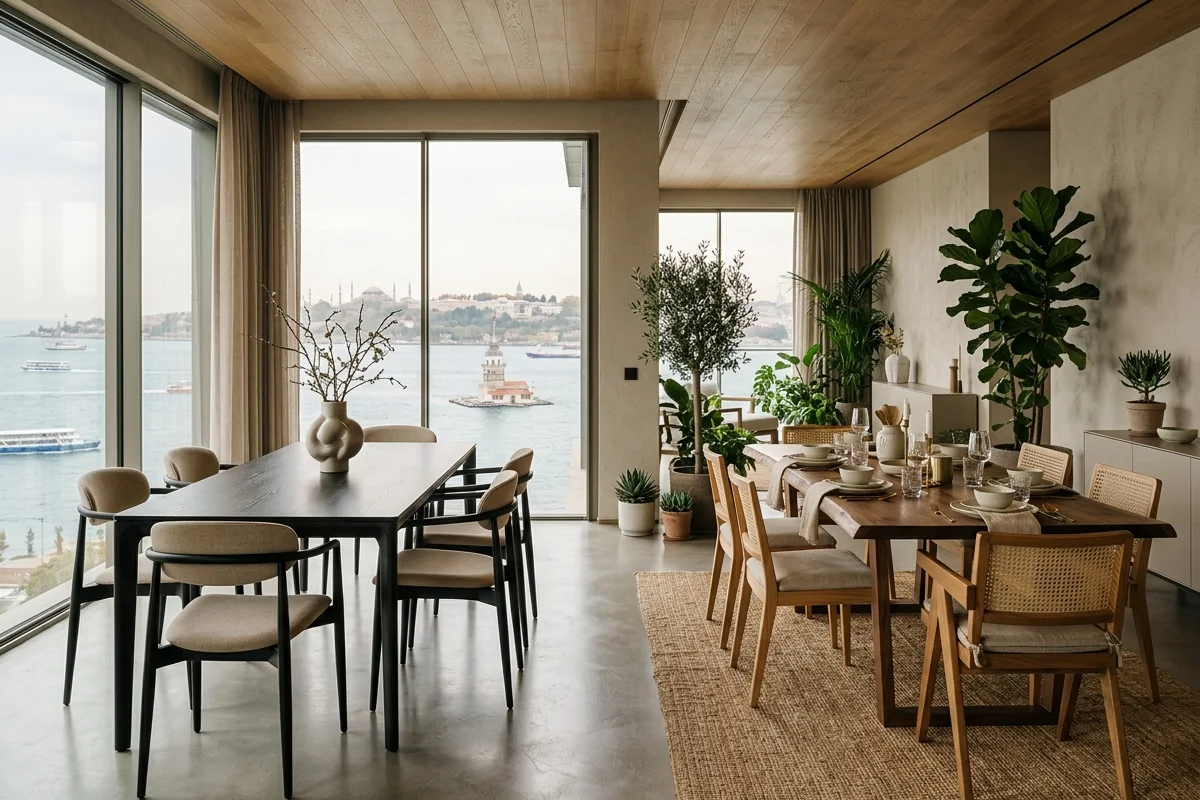
Round, oval and rectangular tables each suit different room shapes and numbers of users. Compare chair clearance and circulation before selecting travertine, walnut or a composite finish. Different chair designs can work together when scale, comfort and material relationships are deliberate.
Master Bedroom
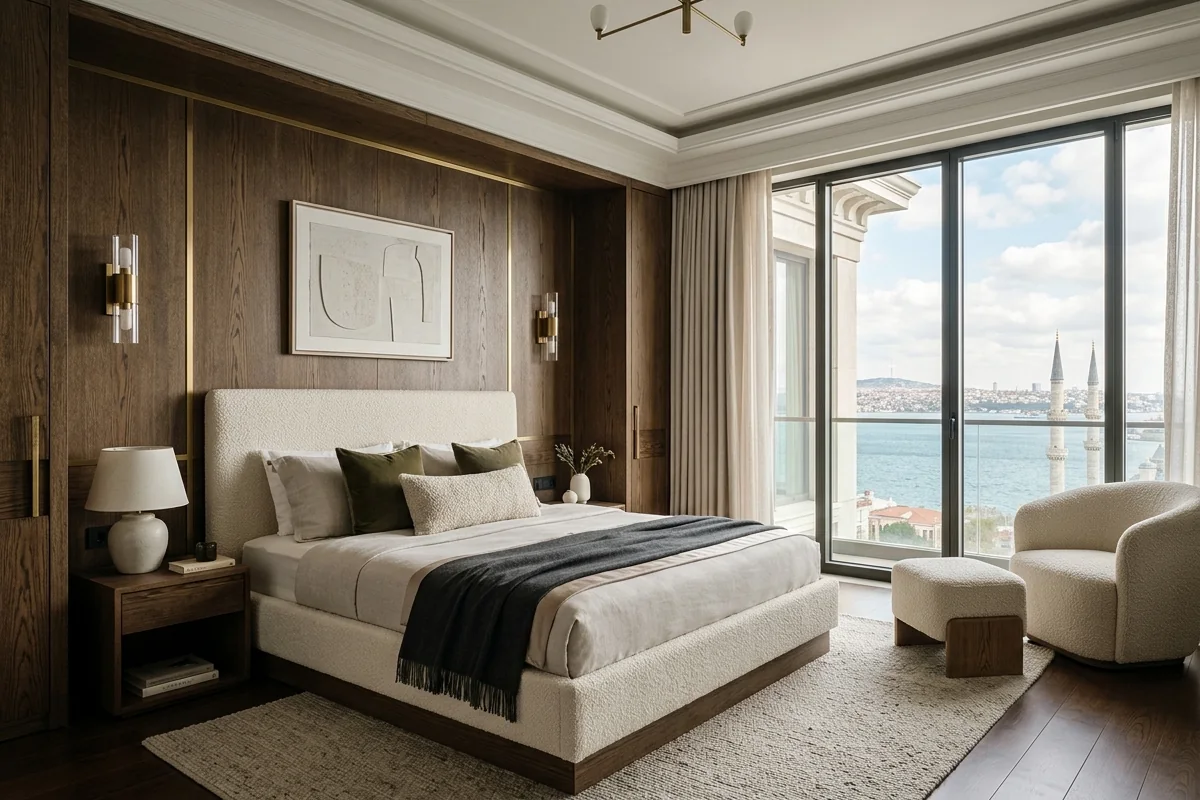
A bedroom may combine an upholstered bed with a defined headboard, floating bedside shelves or freestanding tables. Dressing storage can use timber, glass and integrated lighting where space allows. Check opening clearances, privacy and access; a walk-in dressing room is an option rather than a requirement at a particular property price.
Home Office
A home office benefits from a comfortable chair, suitable desk height, cable management and accessible storage. Integrate task lighting and consider glare and video-call backgrounds. See office interior design in Istanbul for related workspace considerations.
The practical application of these trends requires skilled project management and supplier relationships. If you are planning a full renovation or new-build fit-out, understanding the steps in project planning and execution will help you avoid costly delays and specification errors.
Key questions to ask your designer before specifying furniture:
- Does the furniture scale correctly to the ceiling height and room proportions?
- Are the materials appropriate for Istanbul’s humidity levels and seasonal temperature variation?
- Do the lead times align with your construction or renovation schedule?
- Are the suppliers able to provide material certifications if required by your building’s management?
- Does the overall palette create a coherent flow between connected rooms?
Furniture selection needs to connect appearance with daily use. Check how each piece contributes to circulation, comfort and storage, and review complex combinations in a shared material and layout plan.
Comparing the Top Furniture Styles for Istanbul Luxury Homes
Different furniture styles can suit different homes and preferences. The comparison below describes design characteristics and practical considerations, without assigning market rankings or resale premiums.
| Style | Characteristics | Possible fit | Budget considerations | Practical considerations |
|---|---|---|---|---|
| Contemporary minimalist | Clear lines, restrained palette | Apartments and modern villas | Depends on products and detailing | Comfort, storage and maintenance |
| Ottoman-inspired contemporary | Geometry, colour, custom details | Homes engaging with heritage references | Custom work and craft affect cost | Proportion and context |
| Nature-inspired | Organic forms, wood, stone, earthy tones | Homes prioritizing natural elements | Compare material origin and processing | Care, moisture and durability |
| Transitional | Traditional and contemporary elements | Homes combining existing and new pieces | Retained furniture may shape scope | Consistent scale and material relationships |
| Eclectic maximalist | Colour, pattern and art | Homes with curated collections | Varies with selected pieces | Visual balance and display space |
An Ottoman-inspired contemporary approach may combine geometric joinery, rich colour, regional rugs and modern upholstery or lighting. Select references carefully and avoid treating any city or style as a guarantee of authenticity or investment advantage. The relationship to the property and its users is the central design question.
Furniture should be coordinated with finishes, circulation and building services. A coordinated project scope can define design and installation responsibilities. Check the proposed deliverables and interfaces before procurement.
The LEED framework can inform discussion of building environmental goals. A furniture selection or reference to LEED does not confer certification. Request product-specific sourcing information and do not assume a measurable resale gain from a sustainability label alone.
Understanding how to select the right design partner is as important as selecting the right furniture. If you are evaluating studios, our guide on how to choose an architectural design firm gives you a structured framework to assess capability, process, and fit.
A coherent furniture plan connects craftsmanship, dimensions, comfort and materials. Confirm samples, delivery dates and installation requirements before ordering. Well-documented decisions make it easier to compare offers and coordinate the final interior.
Frequently Asked Questions
Q1: Which furniture materials can be considered for an Istanbul home?
Travertine, marble, oak, textured fabric, brass and reeded glass are among the options discussed here. Suitability depends on durability, care, comfort and the design brief. Review timber sourcing and finish emissions documentation where relevant; this is not a popularity ranking.
Q2: How do furniture trends in Istanbul differ from broader European luxury trends?
Contemporary furniture can be combined with local references such as Hereke rugs or İznik-inspired patterns. The distinction comes from how these pieces relate to the architecture and residents. Regional inspiration and international products can coexist without prescribing one identity for every Istanbul home.
Q3: Should I hire an interior design studio to implement these furniture trends, or can I manage it independently?
Professional support can help with sourcing, dimensions, schedules and coordinated specifications, particularly in a complex project. A smaller furniture refresh may be managed independently with careful measurements and planning. Compare the required services, responsibilities and fees; see AA Architecture’s studio information when considering a consultation.
Q4: How do furniture choices affect the resale value of a luxury home in Istanbul?
Furniture affects presentation and everyday usability, but property value depends on location, building condition, market conditions and other factors. No specific style or price bracket guarantees a premium. Choose durable pieces that suit the project and assess any investment assumption separately.

Related Posts
High-End Interior Design: 7 Illustrative Scenarios
Explore 7 client success stories in high-end interior design and discover how…

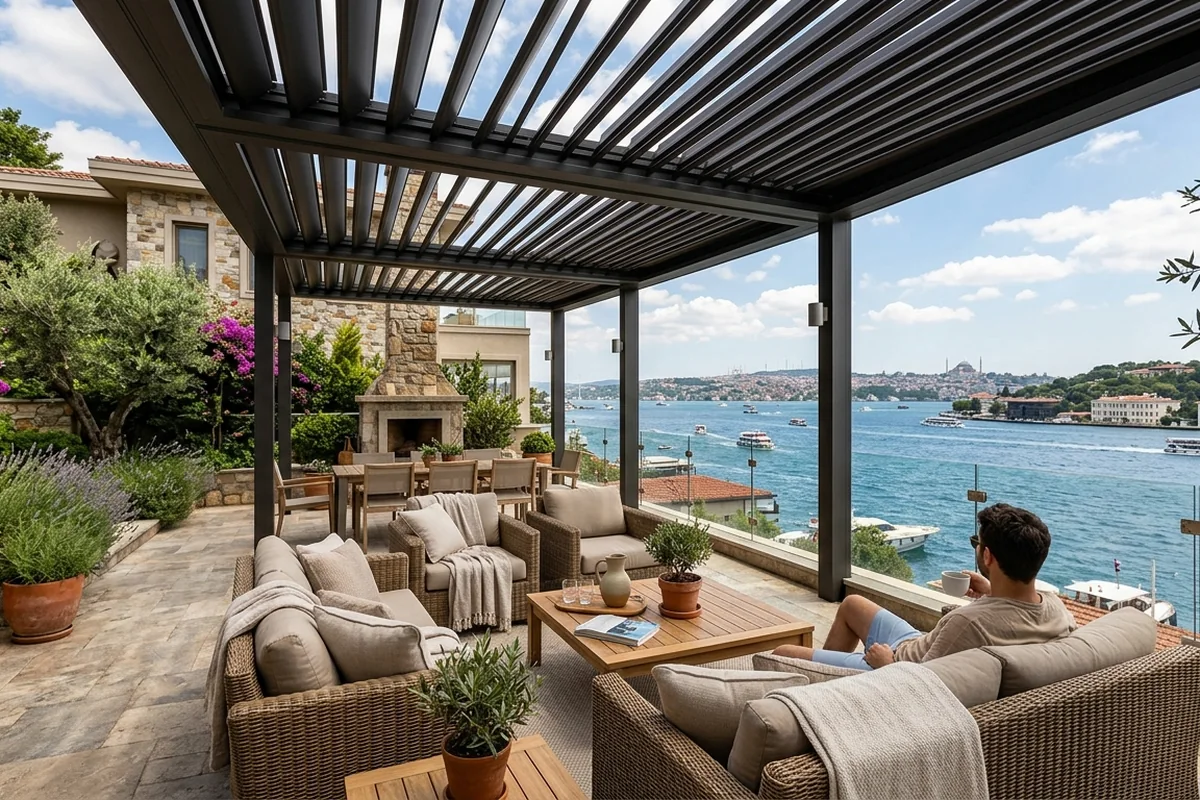
Outdoor Living Spaces for Istanbul’s Climate: 7 Strategies
Discover 7 expert tips for designing outdoor living spaces for Istanbul's…
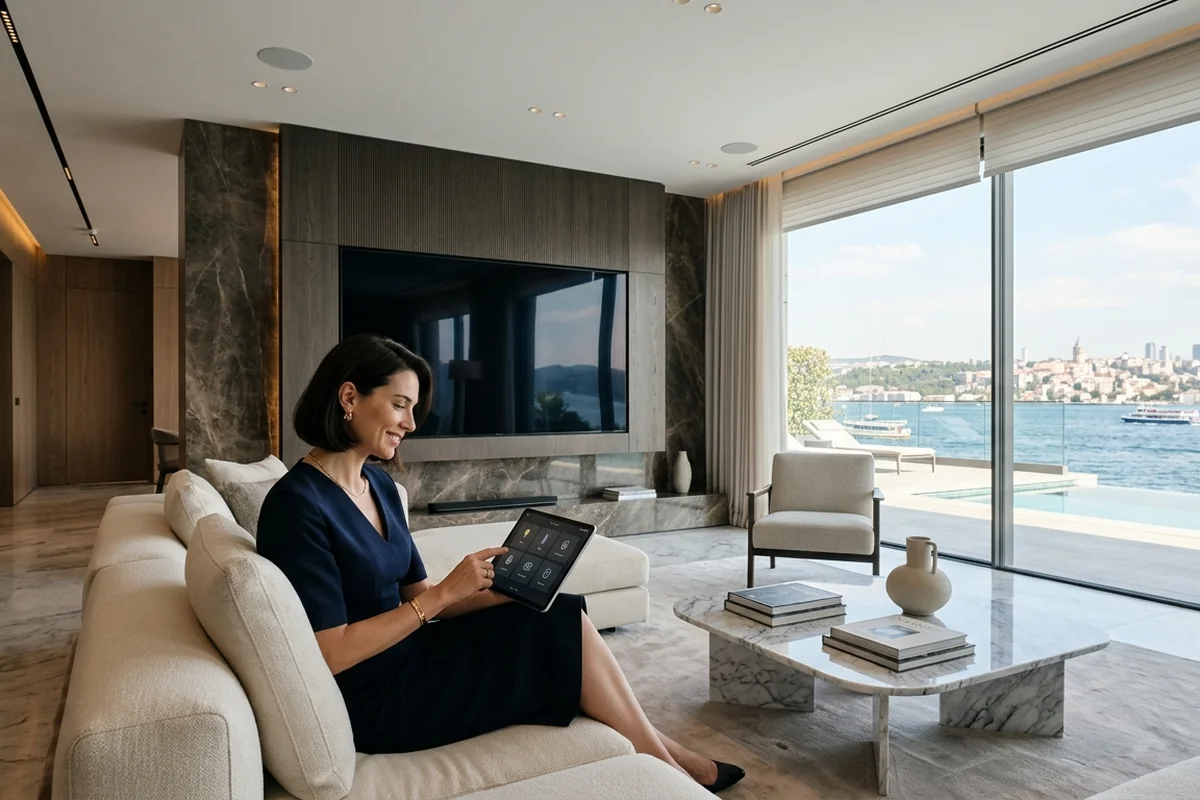
Smart Home Technology for Luxury Interiors: 10 Tips
Discover how smart home technology for luxury interiors elevates comfort,…