

The role of art in high-end interior design goes far beyond hanging a painting on a wall. Art anchors a space emotionally, signals sophistication, and communicates the owner’s identity before a single word is spoken. For property owners, villa developers, and commercial investors seeking truly distinguished interiors, understanding how art functions within a design scheme is not optional — it is essential. In this guide, we break down seven expert insights that reveal exactly how art elevates luxury spaces from impressive to unforgettable.
The entrance and material details in AF Villa show how sculptural elements can be composed with circulation, stone surfaces and lighting. This is a design reference for placement and visual balance, not a claim about the provenance or investment value of artworks.
The Role of Art in High-End Interior Design: Why It Matters
Art is not decoration — it is architecture for the senses. When designers at the highest level approach a project, they treat artwork as a structural element of the visual composition, not an afterthought. A single sculptural piece can define the entire spatial narrative of a living room. A large-format canvas can resolve an awkward wall proportion that no furniture arrangement could fix.
Art can influence the atmosphere of a room and the personal meaning occupants attach to it. Responses vary with individual taste, subject, context and presentation. Discuss the intended experience with the client early rather than assuming a particular artwork will produce a predictable psychological or financial result.
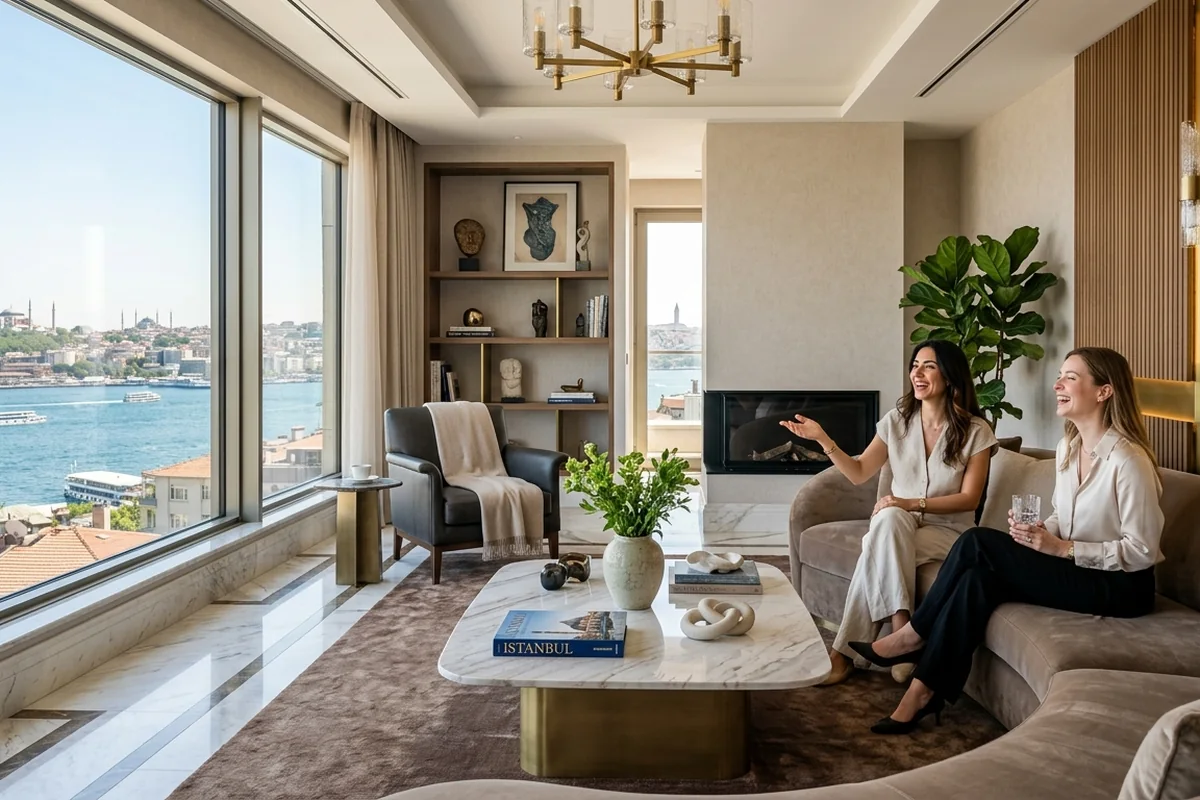
At AA-DO Studio, we collaborate with clients to develop art strategies that align with the architectural language of each project. Whether we are designing a Bosphorus-view villa or a premium commercial office in Istanbul, art selection begins during concept development — never at the finishing stage. Coordinate materials, lighting, circulation and artwork placement as related design decisions.
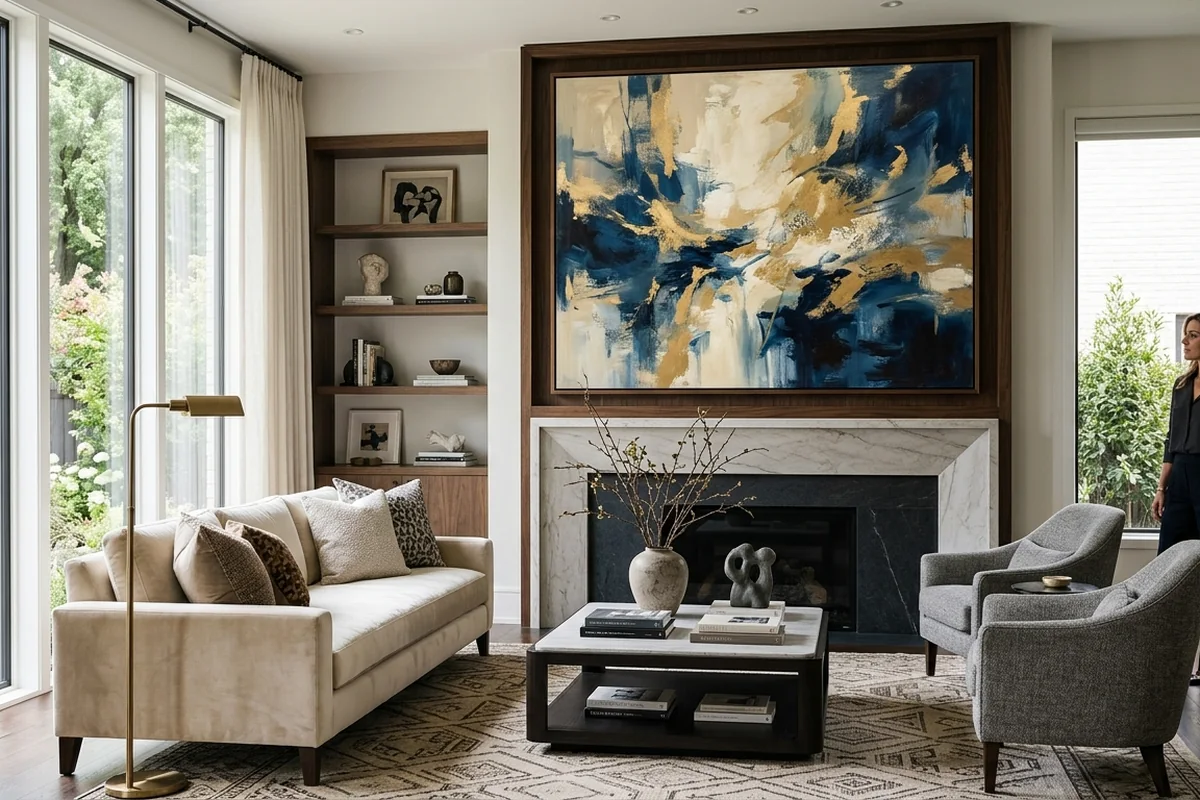
How Art Selection Shapes the Atmosphere of Luxury Spaces
Choosing art for a high-end interior is a discipline that combines aesthetic judgment, cultural literacy, and spatial intelligence. The wrong piece in the wrong context does not simply look out of place — it actively undermines the design intent. Conversely, the right work of art can make an entire room feel inevitable, as though it could not exist any other way.
Consider these core principles that guide expert art selection in luxury interiors:
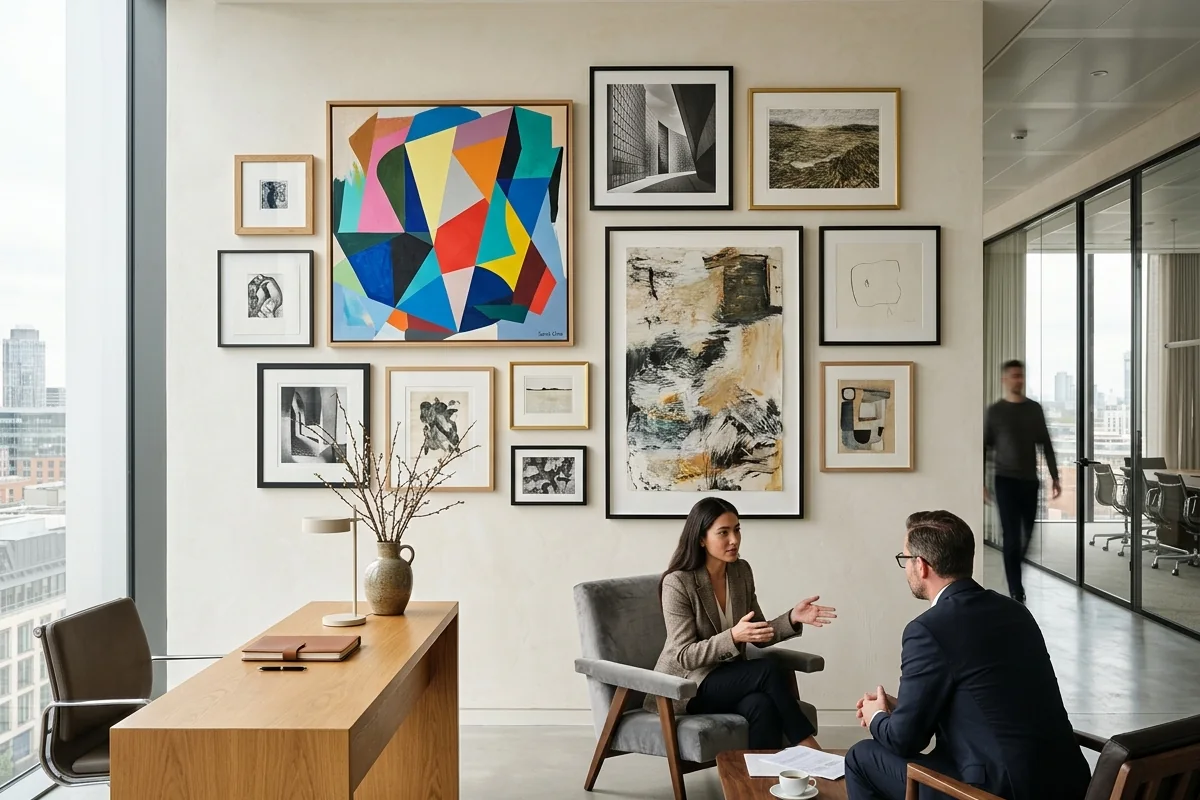
- Scale and proportion: Oversized works create drama and command attention; smaller works grouped in curated clusters build narrative and intimacy.
- Color relationship: Artwork should either echo the palette of the space or introduce a deliberate, controlled contrast that energizes the room.
- Medium and texture: Sculptural pieces, textile art, and mixed-media works add tactile dimension that flat photography or prints cannot replicate.
- Cultural resonance: Art rooted in local heritage or globally recognized movements gives a space intellectual depth and conversation value.
- Lighting integration: Directional spotlights and suitable picture lighting help reveal colour, texture and detail. Specify light levels and exposure with the artwork’s conservation needs in mind.
- Provenance and authenticity: Documenting authorship, ownership history and authenticity supports informed collecting. An original work is not a guarantee of investment returns.
- Thematic continuity: A coherent art narrative across a property — whether a villa or a boutique hotel — creates a memorable identity that mass-market design cannot replicate.
Design publications such as Dezeen offer examples of art in residential and commercial interiors. Use project examples as inspiration while assessing how scale, lighting and circulation apply to your own space.
For villa projects specifically, our team at AA-DO approaches art curation as part of the broader architectural vision. You can explore how we handle this in our Villa Architectural Design Istanbul portfolio, where art, architecture, and landscape design are developed as a unified whole.
Practical Strategies for Integrating Art into Bespoke Interiors
Knowing that art matters is one thing. Knowing how to integrate it effectively into a high-end interior requires a systematic, expert-led process. Below are seven practical strategies that luxury interior designers use to make art work harder in every space.
1. Start with the architecture, not the art.
Identify the key focal walls, transitional corridors, and anchor points in the floor plan before selecting any pieces. Art placement should respond to architectural logic, not fight against it.
2. Commission bespoke works.
A commissioned work can be developed for the scale, palette and theme of a particular room. An existing gallery piece may also be appropriate. Compare artistic quality, the client’s connection to the work, budget and installation requirements rather than assuming one purchasing route is always superior.
3. Mix mediums deliberately.
Combine painting, sculpture, photography, and installation art across a property to create visual variety and intellectual engagement. Each room can have its own artistic identity while contributing to an overarching narrative.
4. Use art to manage spatial perception.
Vertical compositions make ceilings feel higher. Horizontal works elongate walls. Large-scale abstracts in narrow corridors create the illusion of depth. Art is one of the most powerful spatial tools a designer possesses.
5. Invest in professional art lighting.
Collaborate with lighting designers to specify fixtures that serve the art, not just the room. Adjustable-angle spotlights, color-temperature-controlled LED strips, and anti-reflective glazing on framed works all contribute to optimal presentation.
6. Build in flexibility.
High-end clients often expand their collections over time. Design hanging systems, electrical infrastructure, and wall finishes that allow for future art changes without renovation.
7. Document and insure.
Every significant artwork in a luxury interior should be professionally documented, appraised, and insured. This protects both the client’s investment and the integrity of the design scheme.
The Art Basel and UBS Global Art Market Report is a resource for understanding the art market. Market reporting should not be treated as proof that placing art in a home will increase property value or satisfaction by a predictable amount.
For clients undergoing full property transformations, understanding the steps in project planning and execution helps ensure that art integration is budgeted and scheduled correctly from day one — avoiding costly retrofitting later.
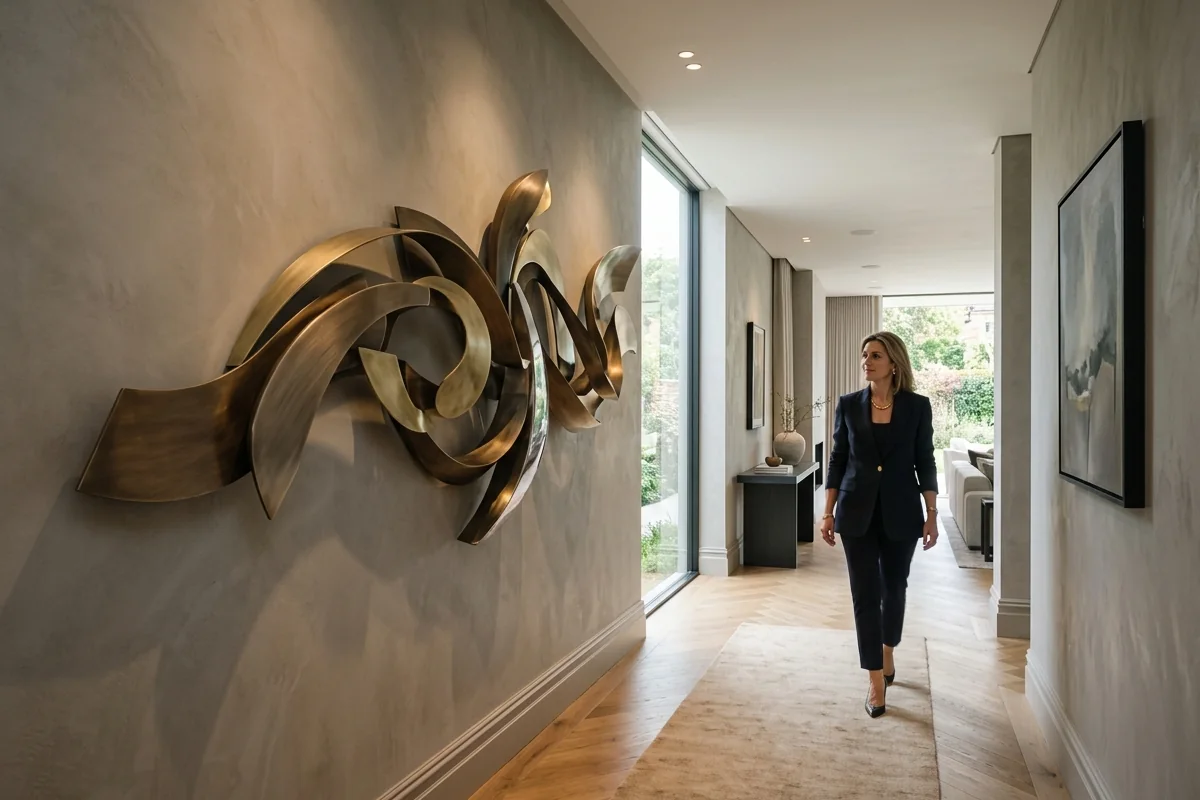
Academic resources such as those from University College London can help readers explore how people experience art. Findings about perception or pleasure should not be converted into claims of a measurable property-price increase without directly relevant evidence. For a design project, focus on the client’s response, accessibility and the intended atmosphere.
Art in Commercial and Residential High-End Projects: A Comparison
The role of art shifts meaningfully depending on whether the project is residential or commercial. Understanding these differences allows designers and clients to make smarter curatorial decisions and allocate art budgets more effectively.
| Factor | Residential High-End Interiors | Commercial High-End Interiors |
|---|---|---|
| Primary Purpose | Personal expression, emotional resonance | Brand identity, client impression, employee wellbeing |
| Audience | Homeowner, family, private guests | Clients, employees, partners, public |
| Scale of Works | Varied; intimate to monumental | Typically larger-scale, high-impact |
| Curation Approach | Personal taste, collector-driven | Brand-aligned, often professionally curated |
| Budget Allocation | Set according to the collection and agreed scope | Set according to brand aims and the agreed scope |
| Flexibility | High; collection evolves with owner | Lower; changes require stakeholder approval |
| Art Type Preference | Original works, sculptures, textiles | Commissioned installations, photography, murals |
| Lighting Requirements | Residential-grade, warm and intimate | Commercial-grade, durable, adjustable |
This comparison makes clear that while the underlying principles of art integration remain consistent, the execution strategy must adapt to the context. A corporate law firm in Istanbul requires a very different art approach than a private Bosphorus-view penthouse — even if both projects operate at the same level of luxury.
Our commercial architecture expertise in Istanbul means we regularly navigate this distinction for clients across hospitality, retail, and professional services sectors. In every case, the art strategy is developed in direct dialogue with the architectural and interior design teams to ensure absolute coherence.
For residential clients, our luxury architectural design work in Istanbul demonstrates how art, material, and spatial design merge into a single, seamless experience that defines the very best in contemporary living.
Publications such as ArchDaily can provide visual references for integrating art with architecture. Critical recognition, satisfaction and media attention depend on the particular project; including art alone does not ensure these outcomes.
Frequently Asked Questions
Q1: What is the role of art in high-end interior design exactly?
The role of art in high-end interior design is to serve as a structural, emotional, and cultural anchor within a space. Art defines focal points, communicates identity, manages spatial perception, and creates emotional resonance that no finish material or furniture piece can replicate on its own. In luxury interiors, art is treated as an architectural element — planned from the earliest design stages, not added at the end.
Q2: How much of an interior design budget should go toward art?
There is no fixed art-budget percentage appropriate to every project. Agree on the artworks, curation, lighting, mounting, transport, conservation and insurance within the overall budget. Commissioned and existing works should be compared on artistic suitability and full cost, without assuming a financial return.
Q3: Should I hire a separate art consultant or can my interior designer handle art curation?
Ask your interior designer whether art selection and installation coordination are included in the agreed scope. For a significant collection or specialist collecting ambitions, an independent art advisor may add useful expertise. Keep decisions coordinated with the architectural and lighting design rather than treating them separately.
Q4: Does art increase the resale value of a luxury property?
Art is usually movable and may be excluded from a property sale. Thoughtful lighting, wall preparation and spatial planning can improve presentation and make a property more suitable for a collector, but they do not guarantee a resale premium. Financial outcomes depend on the property and market.
Q5: How does lighting affect art in luxury interiors?
Lighting affects perceived colour, texture and visual presence. Adjustable directional fittings, suitable LEDs and anti-reflective glazing may improve presentation. Warm light around 2700K–3000K is one option, but colour rendering, glare, exposure and the artwork’s conservation requirements should guide the final specification.

Related Posts
High-End Interior Design: 7 Illustrative Scenarios
Explore 7 client success stories in high-end interior design and discover how…

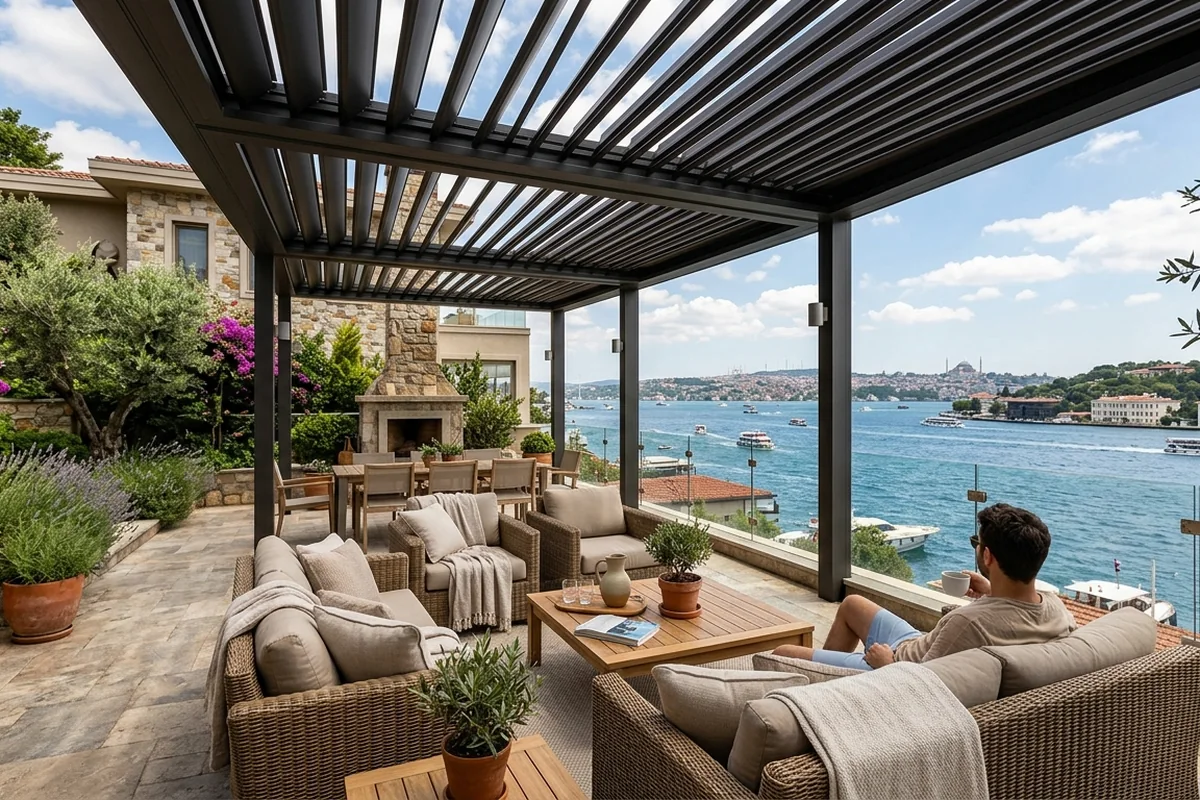
Outdoor Living Spaces for Istanbul’s Climate: 7 Strategies
Discover 7 expert tips for designing outdoor living spaces for Istanbul's…
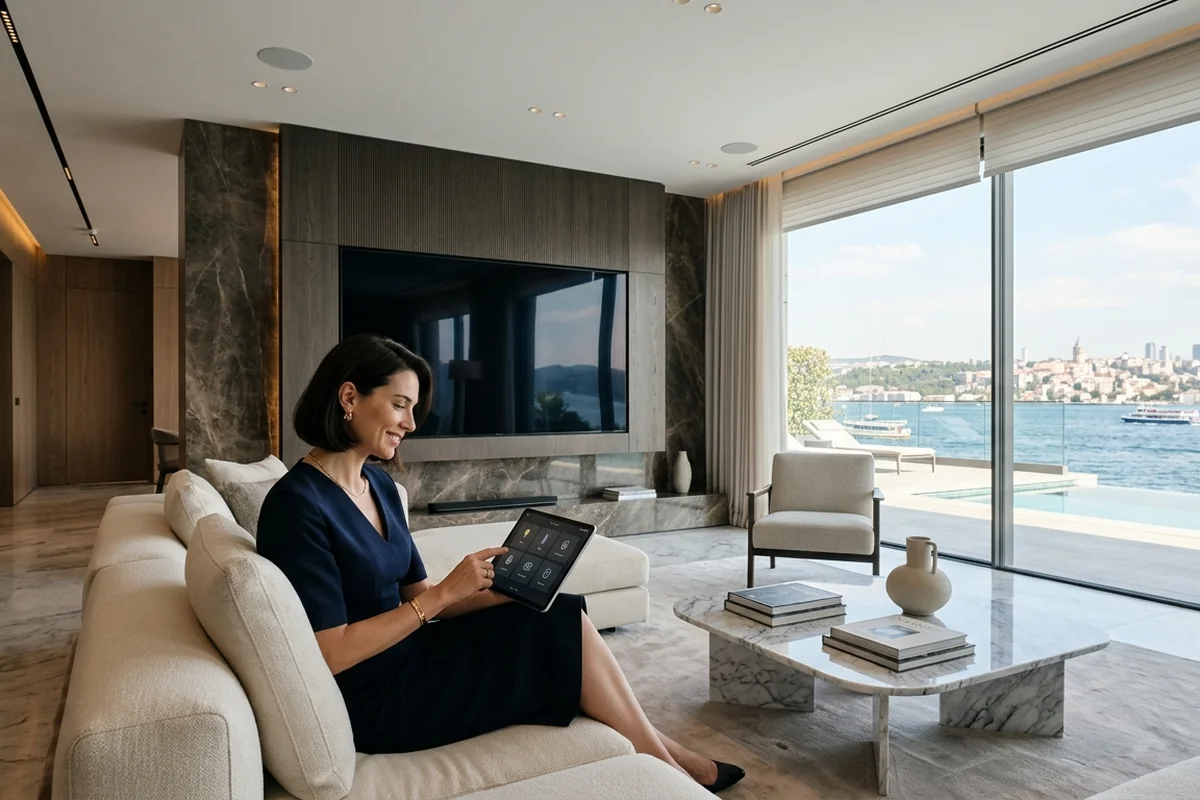
Smart Home Technology for Luxury Interiors: 10 Tips
Discover how smart home technology for luxury interiors elevates comfort,…