

Istanbul boutique hotel architecture stands at a fascinating crossroads — where centuries-old Ottoman grandeur meets bold contemporary design thinking. If you own a property in Istanbul and want to transform it into a sought-after boutique hotel, understanding the architectural principles that make these spaces magnetic is essential. This guide breaks down seven expert secrets that leading designers and architects use to create boutique hotels that guests remember, return to, and rave about. Whether you are a real estate investor, a villa owner, or a commercial developer, these insights will sharpen your vision and protect your investment.
Table of contents
- What Makes Istanbul Boutique Hotel Architecture Unique
- Key Architectural Elements That Define Boutique Hotels in Istanbul
- 7 Expert Design Secrets for a Successful Boutique Hotel
- Comparing Boutique Hotel Architecture Styles in Istanbul
- Frequently Asked Questions
What Makes Istanbul Boutique Hotel Architecture Unique
Istanbul boutique hotel architecture draws its power from the city’s layered identity. No other metropolis on earth sits literally between two continents, and that geographic reality shapes every design decision. Architects here must negotiate Byzantine stonework, Ottoman tile traditions, Art Nouveau facades from the late 19th century, and the clean lines of contemporary hospitality design — all within a single building envelope.
What separates a truly successful boutique hotel from a generic one is intentionality. Every material choice, every ceiling height, every courtyard proportion must tell a coherent story. At AA-DO, our studio has worked with property owners across Istanbul to develop that narrative from the very first concept sketch. The result is spaces that feel both rooted in place and refreshingly original.
The regulatory environment also shapes design outcomes. Istanbul’s historic peninsula falls under strict conservation rules managed by UNESCO and Turkish cultural heritage authorities. Designers who understand these constraints do not fight them — they use them as creative fuel, turning limitations into distinctive character.
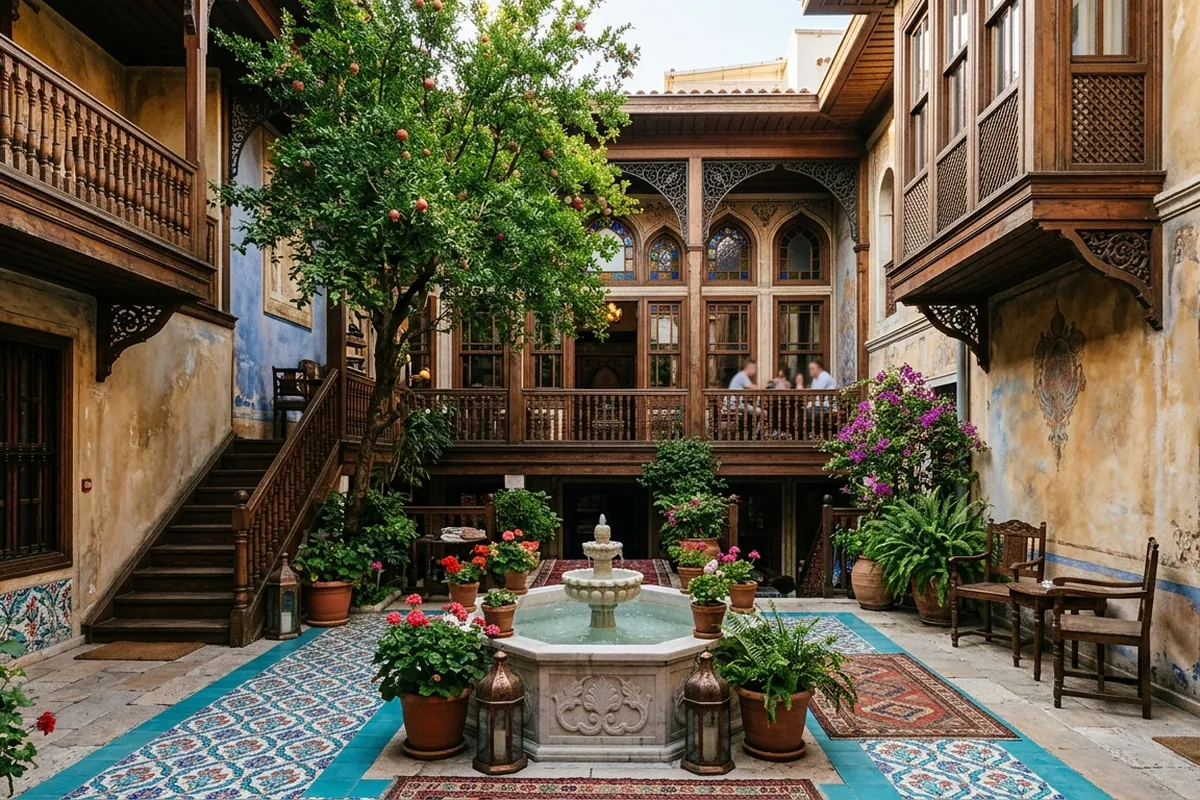
Key Architectural Elements That Define Boutique Hotels in Istanbul
Great boutique hotel architecture in Istanbul consistently relies on a set of recognizable elements. Knowing these elements helps you evaluate any design proposal and ask the right questions of your architect.
- **Courtyard or iç avlu:** The Ottoman tradition of the enclosed courtyard brings natural light deep into the building while creating an intimate outdoor room. Modern boutique hotels revive this layout to offer guests a private refuge from the city’s energy.
- **Pointed arches and muqarnas details:** Even in contemporary interpretations, these classical motifs appear in reception canopies, window surrounds, and decorative ceilings, signaling cultural authenticity without becoming a theme-park pastiche.
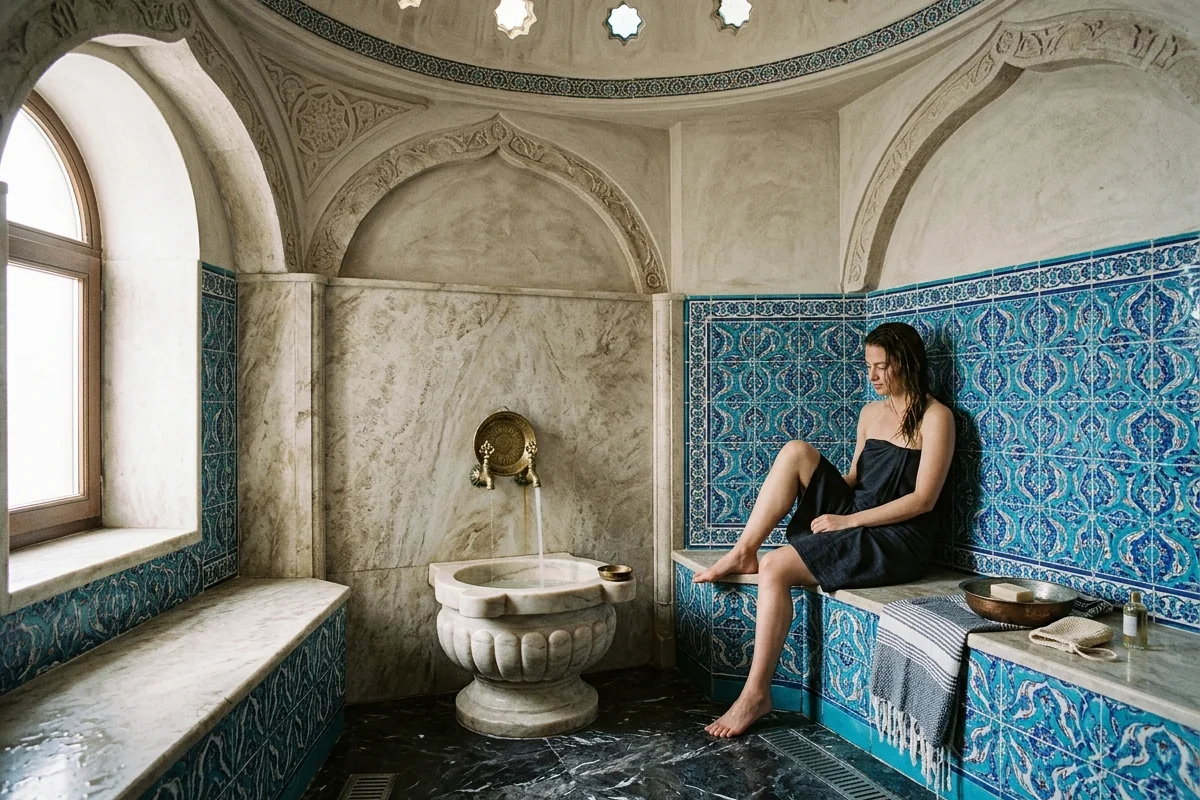
- **Hammam-inspired bathrooms:** Wet rooms clad in Marmara marble or handmade Kütahya tiles reference the traditional hammam, elevating the guest bathroom from a utility space to a sensory experience.
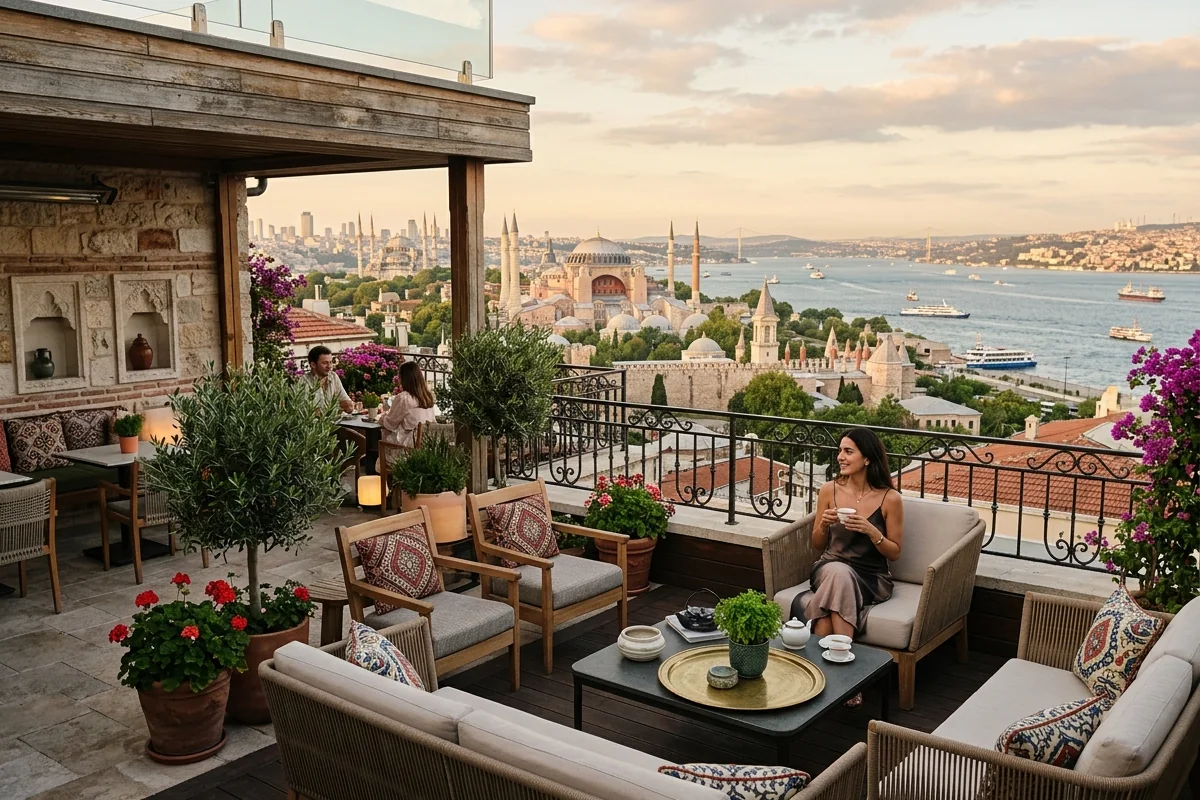
- **Bosphorus-oriented terraces:** Rooftop or upper-floor terraces angled toward the strait are among the most commercially powerful features a boutique hotel can offer. Views command premium room rates.
- **Adaptive reuse of historic fabric:** Many of Istanbul’s best boutique hotels occupy converted Ottoman mansions (yalı), caravanserais, or early 20th-century apartment buildings. Retaining original stone walls, timber beams, and decorative plasterwork dramatically reduces construction waste and creates instant character.
- **Layered lighting design:** Turkish lantern traditions inspire contemporary lighting schemes that layer ambient, accent, and task light to produce warm, atmospheric interiors that photograph beautifully on social media.
According to ArchDaily’s boutique hotel coverage, projects that successfully integrate local material culture consistently outperform generic luxury hotels in guest satisfaction scores and repeat-visit rates. This is not sentiment — it is a measurable competitive advantage.
Understanding these elements also informs how you brief your design team. Our guide to the best architecture firms in Istanbul explains how to evaluate whether a studio has genuine expertise in this specialized typology.
7 Expert Design Secrets for a Successful Boutique Hotel
Now let us get specific. These seven secrets come directly from real project experience designing and delivering boutique hospitality spaces across Istanbul.
1. Start with a narrative, not a mood board.
Before selecting a single tile or paint color, define the story your hotel tells. Is it a 16th-century merchant’s caravanserai reimagined? A modernist take on Bosphorus life? A narrative gives every decision a filter, saving time and budget.
2. Preserve structural authenticity wherever possible.
Original stone walls, timber joists, and decorative plasterwork are irreplaceable assets. Stripping them out to install generic finishes is a costly mistake that destroys the very character guests pay a premium to experience.
3. Commission custom craft.
Istanbul has a living tradition of tile making, woodcarving, metalwork, and textile weaving. Commissioning bespoke pieces from local artisans creates exclusivity that no international supplier catalogue can replicate. It also supports the local economy and resonates with culturally aware travelers.
4. Design for Instagram before you design for the brochure.
Every boutique hotel needs at least three “hero moments” — visually arresting spaces that guests photograph and share. A hand-painted ceiling dome, a rooftop terrace at golden hour, a hammam corridor lined with candlelight — these become your most powerful marketing assets.
5. Invest in acoustic design.
Historic buildings often have hard surfaces that create noise problems. Strategic use of textiles, timber paneling, and acoustic plaster keeps guest rooms serene, which directly impacts review scores.
6. Plan for operational flow from day one.
Beautiful hotels fail commercially when the back-of-house is an afterthought. Kitchen access, linen routes, staff circulation, and service lifts must be integrated into the architectural plan, not retrofitted later.
7. Use 3D visualization to test the design before you build.
Modern rendering technology lets you walk through your hotel before a single wall is demolished. Understanding the benefits of 3D visualization in architecture can save you significant redesign costs and help investors and planning authorities approve your project faster.
Executing these secrets successfully requires a structured approach to project delivery. Our team follows a rigorous process — you can explore the full methodology in our article on steps in project planning and execution.
Here is a practical checklist to use when briefing your architect:
- Define the target guest profile and price point before the design brief
- Audit existing structural and heritage fabric with a conservation specialist
- Establish a material palette that references local craft traditions
- Identify at least three “hero moments” for social media and marketing
- Map the full operational flow including back-of-house before finalizing layouts
- Budget for bespoke craft commissions as a line item, not an afterthought
- Schedule acoustic and lighting design consultations early in the process
Comparing Boutique Hotel Architecture Styles in Istanbul
Istanbul’s neighborhoods each carry a distinct architectural DNA, and the most successful boutique hotels amplify rather than contradict their local context. The table below compares the dominant design approaches across four key districts.
| District | Dominant Architectural Style | Signature Materials | Guest Experience Focus |
|---|---|---|---|
| Sultanahmet | Ottoman Revival / Byzantine | Marble, Iznik tile, carved stone | History immersion, cultural depth |
| Beyoğlu / Pera | Late Ottoman & Art Nouveau | Wrought iron, terrazzo, stained glass | Urban sophistication, arts scene |
| Bosphorus Waterfront | Yalı (Ottoman waterfront mansion) | Timber, white render, blue accents | Nature, panoramic views, tranquility |
| Karaköy | Industrial Adaptive Reuse | Exposed brick, steel, concrete | Contemporary edge, design-forward |
Each style demands a different structural approach, a different conservation strategy, and a different interior language. A design team that applies the same formula across all four districts will produce mediocre results in every one of them. Context-sensitivity is not a luxury — it is a professional baseline.
The hospitality design industry tracks these distinctions carefully. Dezeen’s hotel architecture section regularly features Istanbul projects precisely because the city’s contextual diversity produces genuinely innovative design outcomes. Internationally recognized standards bodies like the International Interior Design Association (IIDA) also highlight culturally responsive hospitality design as a benchmark of professional excellence.
For property owners considering a full conversion project, understanding the architectural style of your district is the essential first step. Our team at AA-DO specializes in exactly this kind of contextual analysis. You can review our completed projects and see how we have applied these principles across Istanbul’s diverse neighborhoods by visiting our Projects page.
If you are also exploring luxury residential or commercial applications of these same design principles, our article on luxury architectural design in Istanbul provides a complementary deep-dive into high-end specification and material selection.
Choosing the right architectural partner is arguably the single most important decision you will make in a boutique hotel project. The wrong team costs you time, money, and competitive positioning. The right team turns your property into a landmark. We invite you to contact our studio to discuss your project and discover how our expertise in Istanbul boutique hotel architecture can bring your vision to life.
Frequently Asked Questions
Q1: How long does it typically take to design and deliver a boutique hotel in Istanbul?
A: The timeline varies significantly depending on the building’s heritage status, size, and scope of renovation. A straightforward adaptive reuse project in a non-listed building typically runs 18 to 24 months from concept to opening. A project within a conservation zone — such as Sultanahmet — can take 30 to 42 months due to additional approval stages with heritage authorities. Starting the permitting process early and working with a team experienced in Turkish regulatory requirements is the most effective way to compress the timeline.
Q2: What is the typical cost per square meter for boutique hotel architecture and fit-out in Istanbul?
A: Costs range widely based on specification level, heritage constraints, and the extent of bespoke craft commissions. Mid-range boutique hotel fit-outs in Istanbul currently run between $1,200 and $2,000 USD per square meter for construction and interiors combined. High-end projects with significant heritage restoration work and custom craft elements can reach $3,000 to $4,500 USD per square meter. A detailed feasibility study at the outset — before committing to a design brief — is essential for accurate budgeting.
Q3: Can I convert a historic Ottoman building into a boutique hotel without losing its heritage status or incurring legal penalties?
A: Yes — but only with the right professional guidance. Turkey’s cultural heritage law (Law No. 2863) requires that any intervention on a listed or registered historic building receive approval from the relevant Regional Board for the Protection of Cultural and Natural Assets. Experienced conservation architects work within these rules to deliver modern hospitality amenities while preserving the building’s registered fabric. Attempting to bypass these requirements results in significant fines and mandatory reinstatement orders. Always engage a studio with proven conservation project experience before purchasing or committing to a heritage property.

Related Posts
Client success stories in high-end interior design: 7 Proven Wins
Explore 7 client success stories in high-end interior design and discover how…

Outdoor living spaces for Istanbul’s climate: 7 Expert Design Tips
Discover 7 expert tips for designing outdoor living spaces for Istanbul's…
Smart home technology for luxury interiors: 10 Expert Tips
Discover how smart home technology for luxury interiors elevates comfort,…